


Budapest: tours, prices and tips
A city spread across both banks of the Danube, with thermal baths, a grand parliament and ruin bars. A direct flight from Kutaisi takes about 3.5 hours.
- Visanot required
- Flight3.5 h · direct
- CurrencyHUF
- SeasonApr, May, Sep, Oct
- Time difference-3 h
Current offers
5 offers · 790 ₾ from
Recent offers
These trips have ended — we can arrange a similar one for new dates.
Overview
Budapest is a beautiful, compact and walkable city that wins the hearts of travellers every day.
The city is divided into two parts: Buda, the "old town", lies on the right bank of the Danube, while Pest lies on the left bank.
Many of its buildings are on the UNESCO World Heritage List, including the Buda Castle Quarter, the Budapest University of Technology, the Gellért Baths (Hungary is rich in mineral springs), the Hungarian Parliament and the century-old metro.
A direct flight from Kutaisi International Airport takes only about 3 hours 15 minutes.
Sights you should not miss
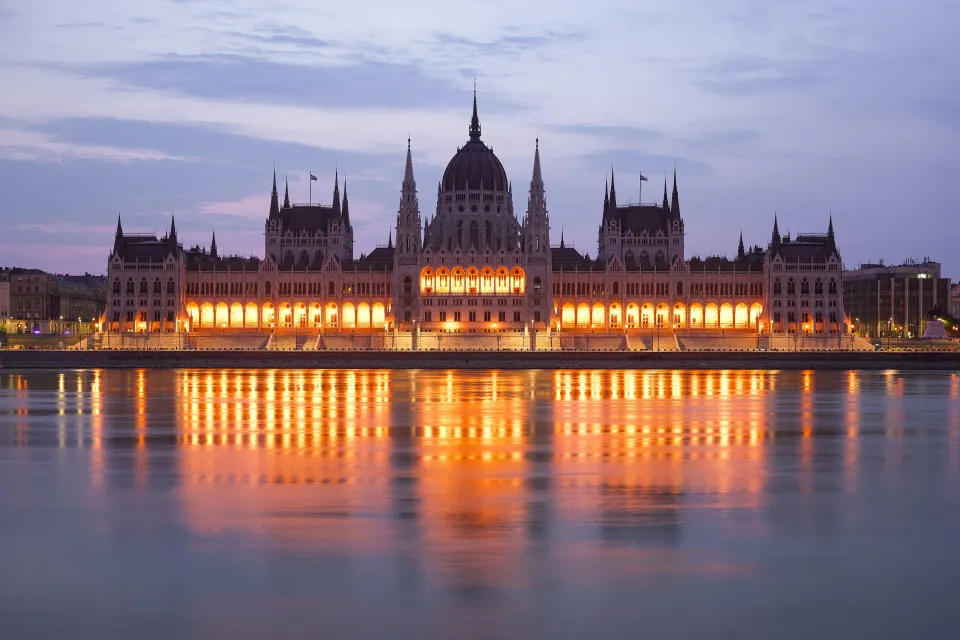
Hungarian Parliament — a neo-Gothic building on the bank of the Danube. When it was built, it was the largest parliament building in the world. It houses the 1,000-year-old Holy Crown and royal regalia, and is surrounded by statues of 16 Hungarian kings. The building is 268 metres long, and its corridors add up to about 20 km.
St. Stephen's Basilica — the second-tallest building in Budapest, a neo-Renaissance church that holds up to 8,500 people, with a lovely square at its entrance.
Opera House — its architecture and interior design impress every visitor.
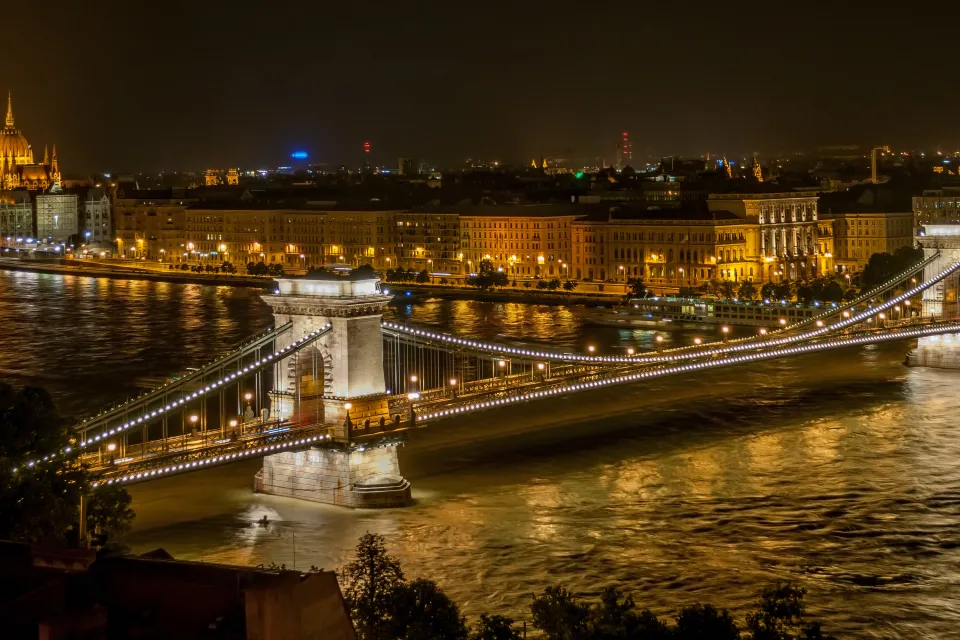
Chain Bridge — of the city's many bridges, the oldest, most distinctive and most beautiful.
Shoes on the Danube Bank — a memorial near the Parliament to the Jews shot during World War II, made up of about 60 pairs of iron shoes of different sizes.
When to go
July–August is hot, 28–33°, but the open-air baths and riverside bars are in full swing.
In December Christmas markets fill Vörösmarty Square and the area around the Basilica. Winters are cold, yet sitting in a hot outdoor pool in the frost is a pleasure of its own.
Practical information
Currency: Hungarian forint; euros are sometimes accepted but at a poor rate. Cards work almost everywhere.
Language: Hungarian; English is fine in the centre and at hotels.
Getting around: metro, trams (tram 2 runs along the Danube) and buses; for a few days, a 24- or 72-hour pass is the best deal.
Time: 3 hours behind Tbilisi, 2 hours in summer.
Getting there
What to see
- 1Parliamenta neo-Gothic landmark on the Danube that holds the Holy Crown of Hungary; book tours in advance
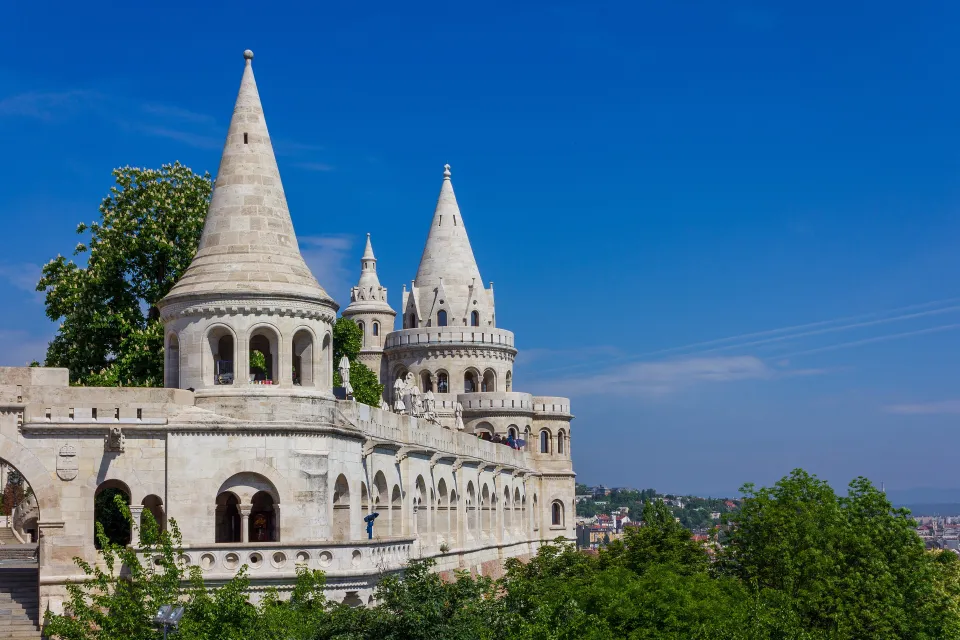
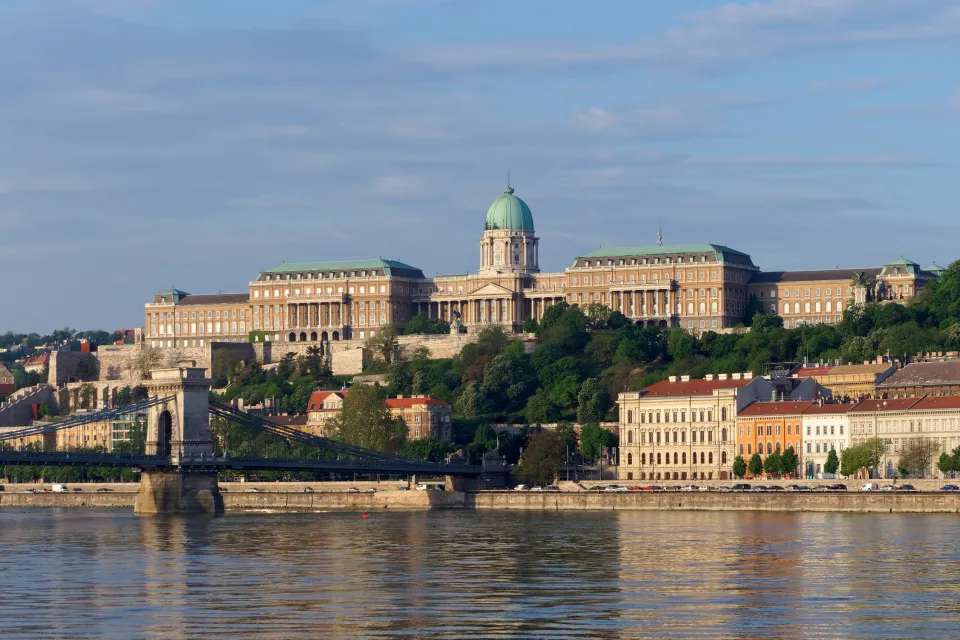
- 2Buda Castle and Fisherman's Bastionold Buda with views over Pest and the Parliament
- 3Széchenyi Bathsthe largest thermal bath, in a bright yellow palace; Gellért Baths rivals it with an older Art Nouveau interior
- 4Chain Bridgethe city's first permanent bridge, beautifully lit at night
- 5St Stephen's Basilicayou can climb up to the dome
- 6Jewish Quarter and ruin barsSzimpla Kert and other bars set in abandoned buildings
- 7Great Market Hallpaprika, salami, lángos and Tokaji wine