
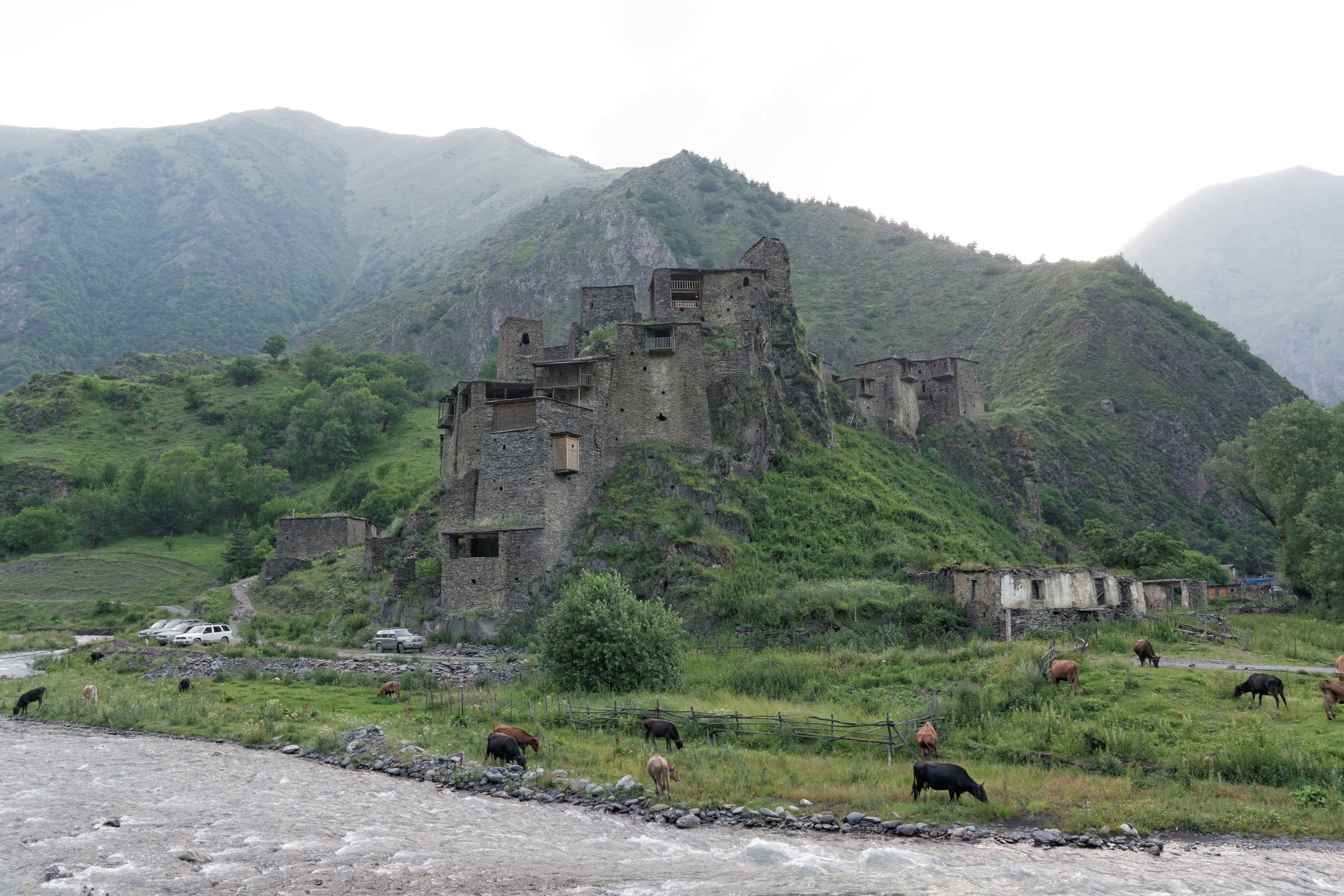
Photo: Vyacheslav Argenberg · CC BY 4.0; Vyacheslav Argenberg · CC BY 4.0; franek2 · CC BY-SA 3.0 · Wikimedia Commons
What's included
- Transfer
- Guide service
- Hand Luggage
- Checked-in Bag
- Meal
- Airtickets
- Museum Tickets
- Travel insurance
- Concert tickets
- სასტუმროში განთავსება
Khevsureti — the tours we offer
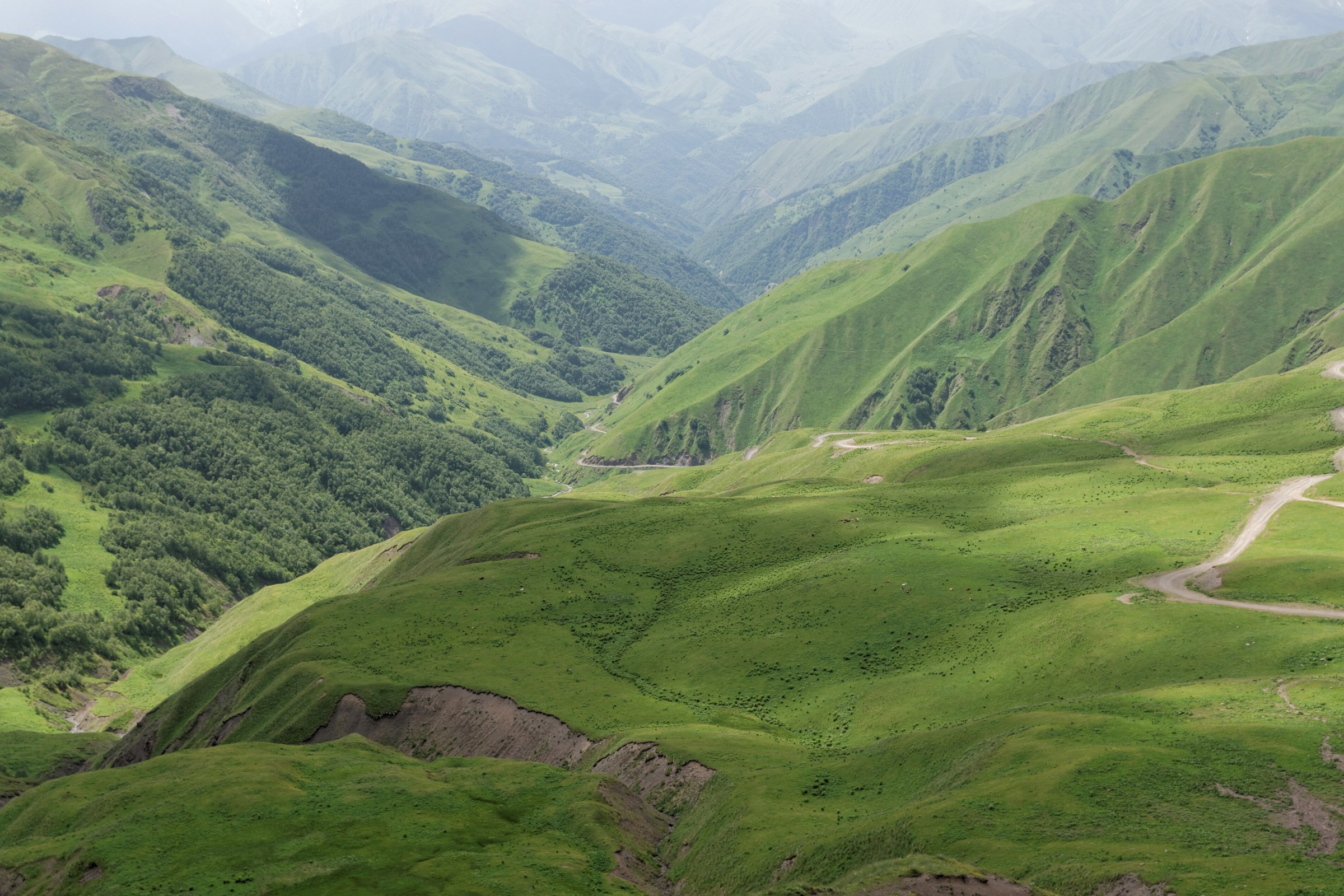
A Khevsureti tour includes transport from Tbilisi in a high-clearance vehicle, a guide and a night in Shatili or Roshka. A day trip is possible, but two days are more relaxed; we will fit the plan to your dates and road conditions.
When to go
July–September is best: 20–25° by day, cool nights, the Datvisjvari pass is open and hiking trails are dry.
In June the road is often still closed or has only just opened; in October the first snow can shut it on any day.
In winter you cannot drive beyond the pass to Shatili and the Arghuni valley, though Barisakho and Roshka are easy to reach.
What to see
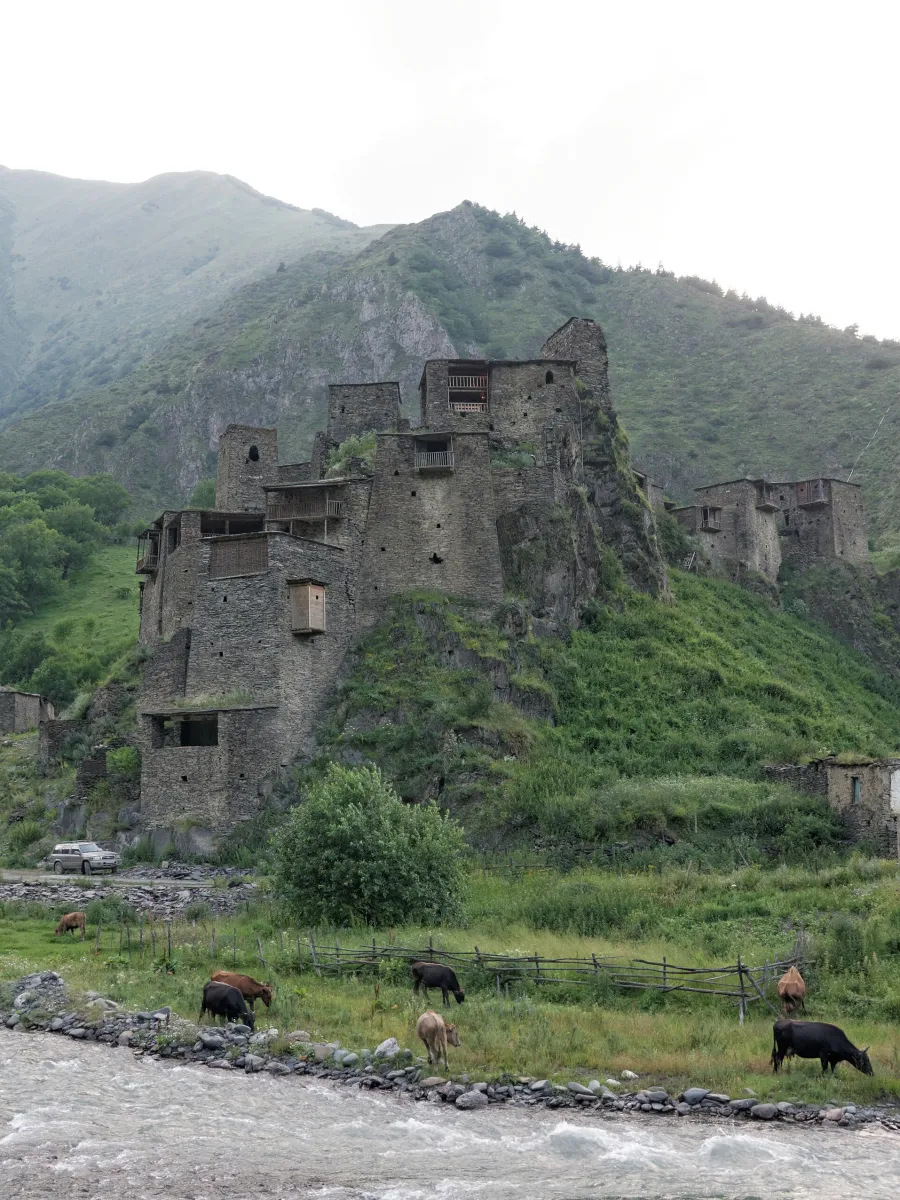
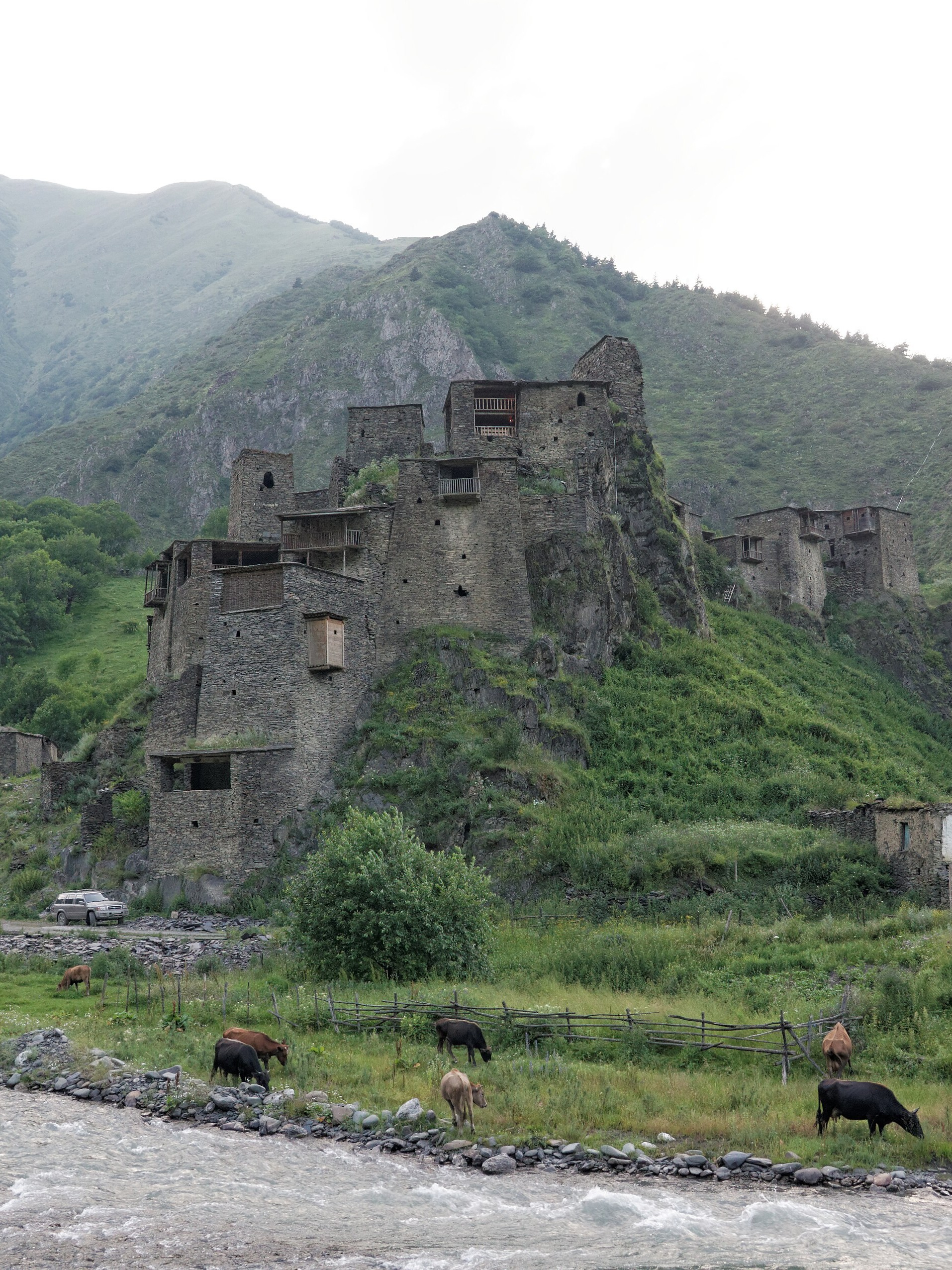
- Shatili — an 11th–18th-century fortress village in the Arghuni valley, with flat-roofed towers built against each other
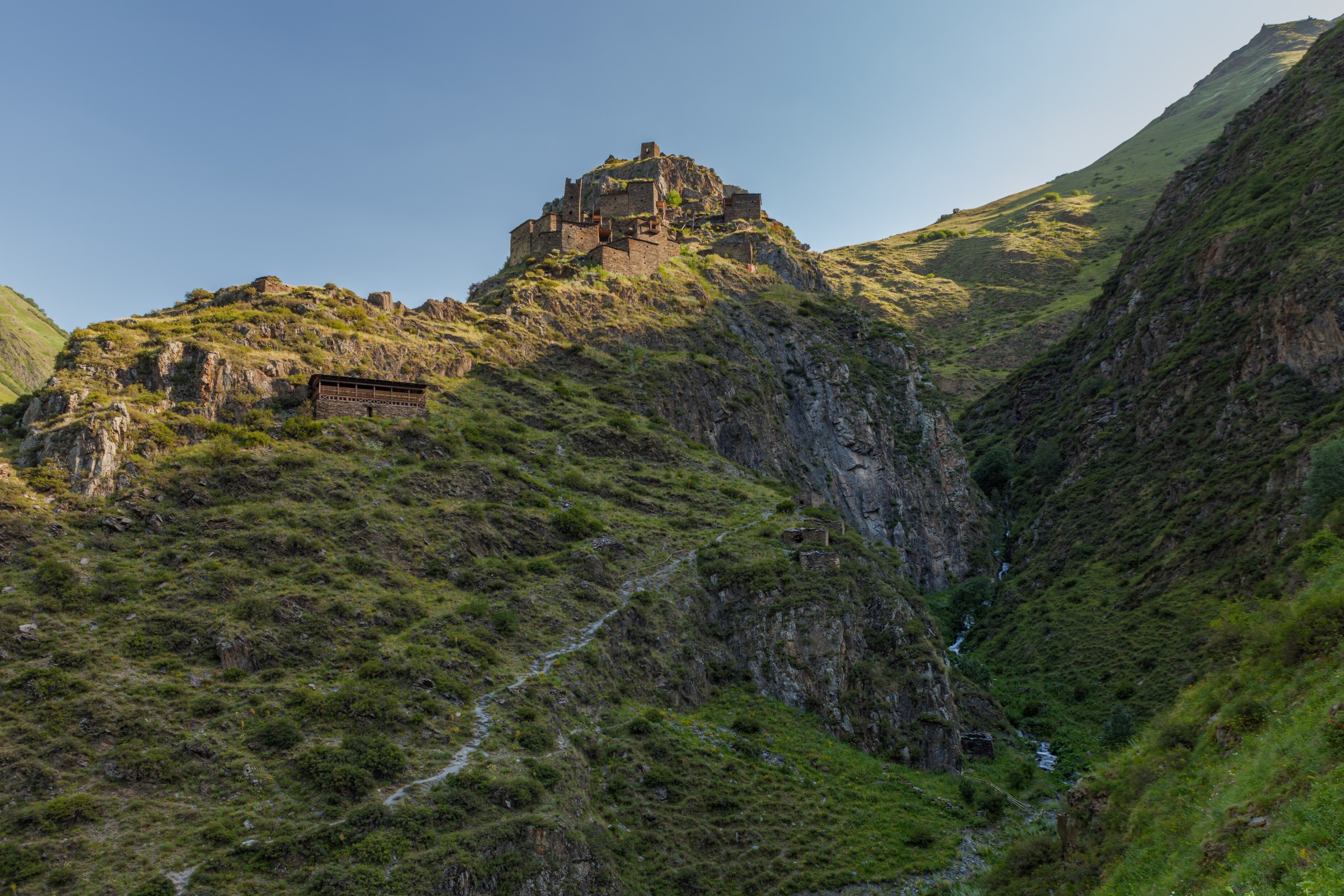
- Mutso — an abandoned village of towers on a rocky crest, 12 km from Shatili
- Anatori crypts — stone tombs by the river, linked to a plague legend
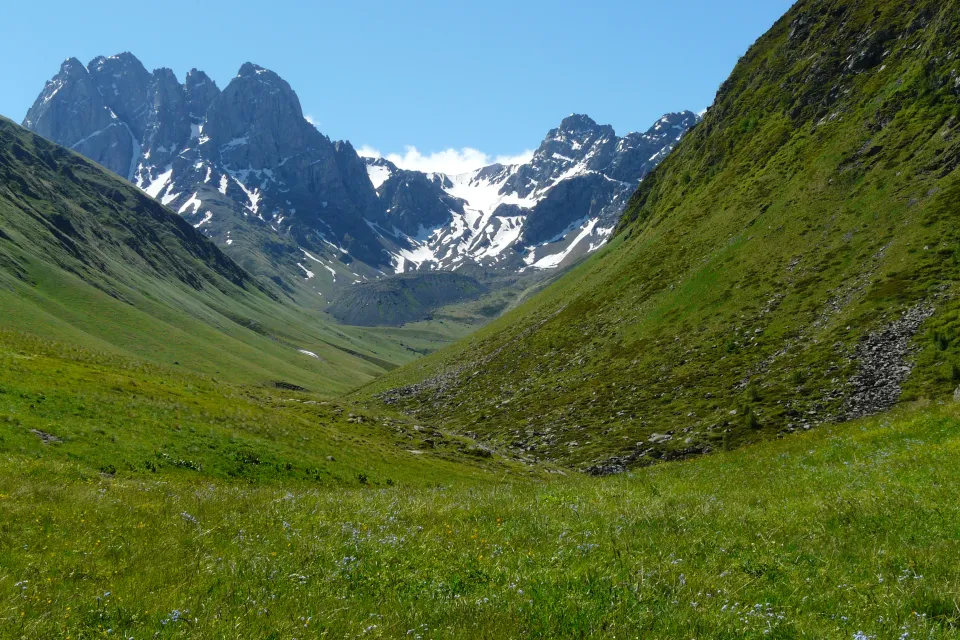
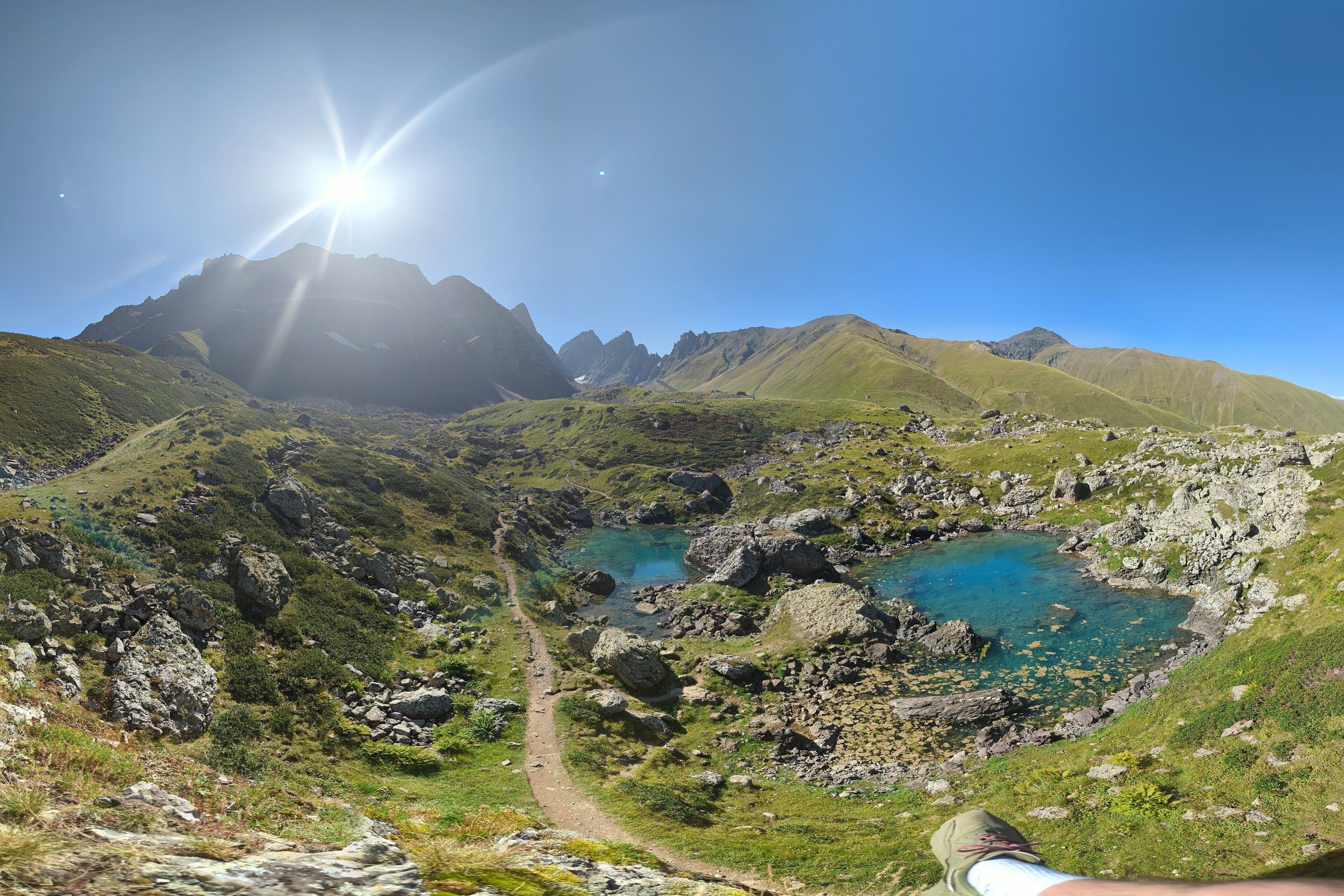
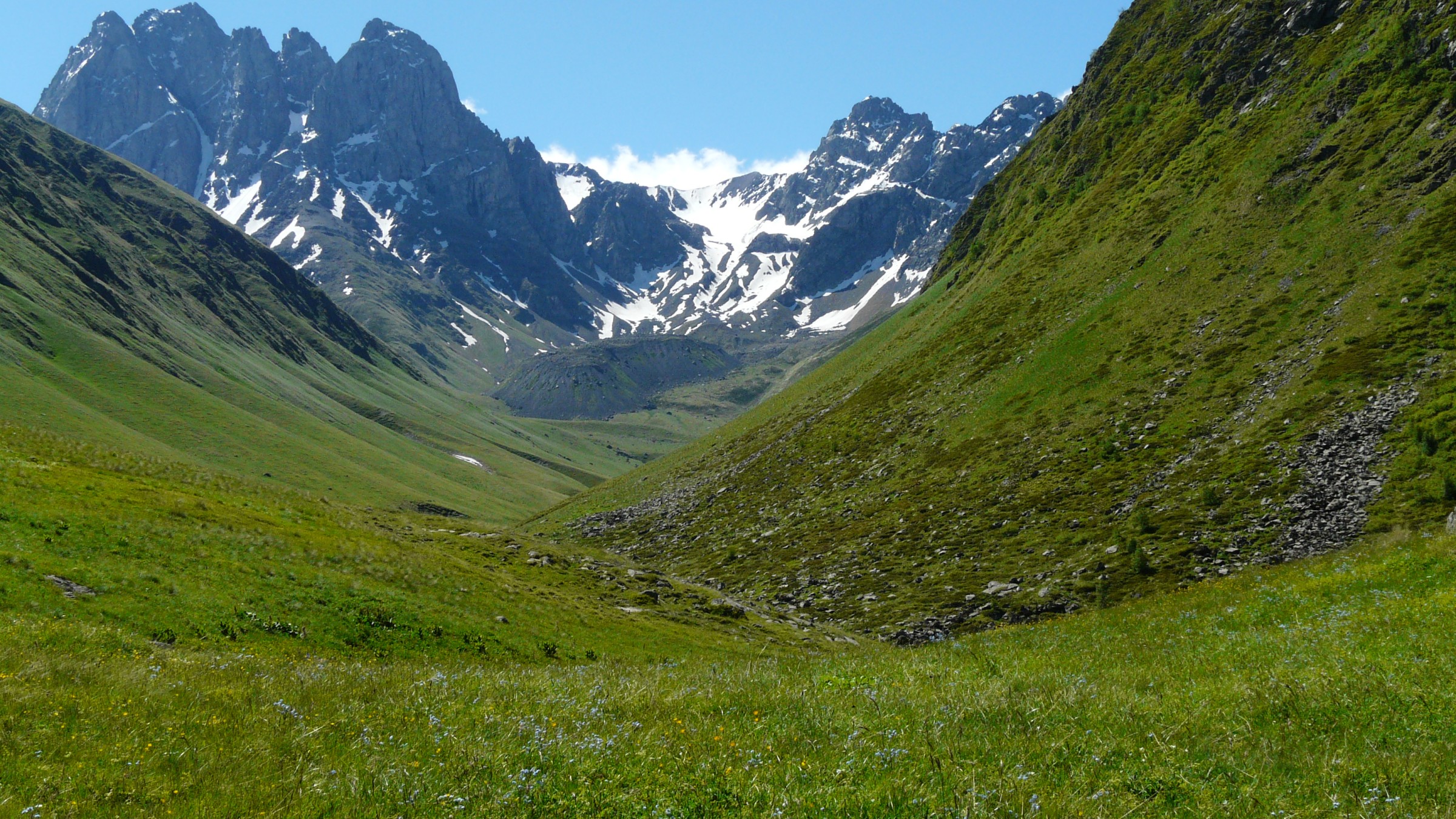
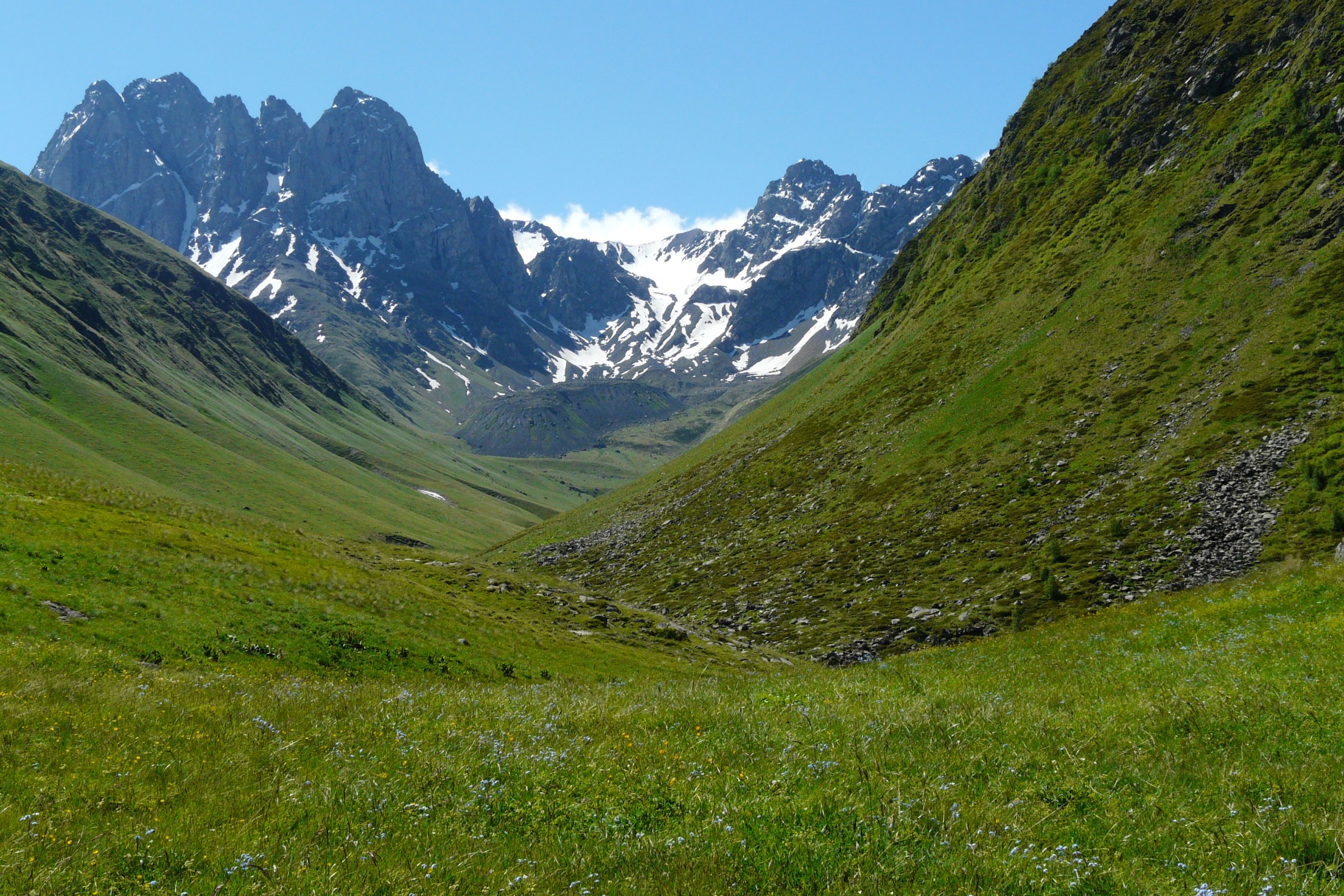
- Roshka and the Abudelauri lakes — a day hike to three differently coloured lakes below the Chaukhi massif
- Korsha ethnographic museum — Khevsur clothing, armour and household objects
- Gudani — the village of Khevsureti's main shrine, at the head of the Aragvi
Getting there
By car, Shatili is about 150 km from Tbilisi, 4–5 hours; Barisakho is under 2 hours. In the summer season (usually July to late September) a minibus runs from Didube to Shatili, taking about 5 hours.
Practical information
Road: from Zhinvali via Barisakho, then over the Datvisjvari pass (about 2,676 m); beyond the pass the road is narrow gravel, so a high-clearance vehicle is better.
Where to stay: family guesthouses in Shatili, Barisakho and Roshka, some in restored tower houses; meals are usually included.
What to pack: warm layers for the evening, a rain jacket, cash (there are no ATMs) and your passport — the Shatili area is a border zone.
Connectivity: mobile signal is weak or absent in many places.